Reviewed · POMPEII
Pompeii Ruins Special
Pompeii is big. This tour is the smart size. In about 3 hours, I love how you get a clear, high-impact route through Pompeii’s biggest public areas—without racing from one corner to the next. With a licensed Campania-region guide led by Zia Lucy, you’ll walk through the Forum area, theaters, and thermal baths, then continue into the street-level world of daily Roman life, including frescoes and mosaics. The idea is simple: you leave with a feel for how the city actually worked.
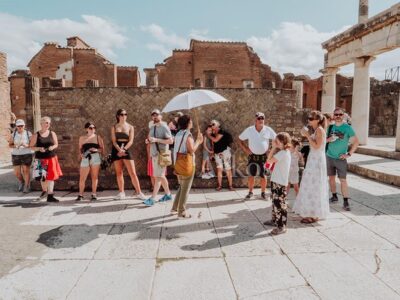
I also like that it’s private (up to 8), so you can ask real questions while you’re standing in the ruins, not hoping someone hears you later. The main thing to consider is that the Pompeii admission ticket isn’t included, so you’ll want to budget extra time and cost for entry before you go.
In This Review
- Key Things You’ll Notice on This Pompeii Walk
- Why A 3-Hour Pompeii Tour Hits the Sweet Spot
- Zia Lucy and the Licensed-Guide Advantage
- Start at Pompei Scavi Villa Dei Misteri: Get Oriented Fast
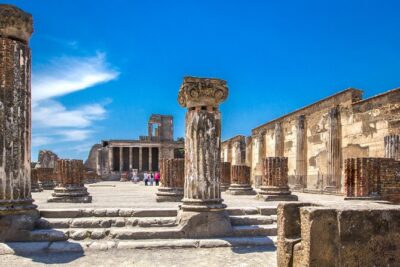
- The Heart of Pompeii: Forum Area and Civic Life
- Theaters: Where Entertainment and Public Voice Met
- Thermal Baths: Daily Routine, Not Just a Roman Flex
- Walking the Ancient Streets: Fountains, Bakery Spots, Shops
- Frescoes and Mosaics: The Art That’s Still Communicating
- Admission Ticket Not Included: Plan Your Budget
- Price and Value: $335.48 Per Group (Up to 8)
- Who This Tour Works Best For
- Should You Book Pompeii Ruins Special?
- FAQ
- What does the Pompeii Ruins Special tour include?
- How long is the Pompeii Ruins Special tour?
- Is this tour private?
- Where does the tour start?
- How much does it cost and how many people can be in the group?
- Do I need to bring a separate ticket to enter Pompeii?
Key Things You’ll Notice on This Pompeii Walk
- Forum focus: the walk is built around Pompeii’s central civic core, so the city story makes sense fast.
- Theaters + public life: you’re shown where people gathered, watched, and socialized—not just stone walls.
- Thermal baths in context: baths are treated as daily routine, not just another stop on a map.
- Street-level details: you’ll pass ancient streets, fountains, and shop/bakery-style areas that explain everyday rhythm.
- Art you can actually see: frescoes and mosaics get pointed out as meaningful, not decoration.
Why A 3-Hour Pompeii Tour Hits the Sweet Spot
Pompeii can swallow a whole day—especially if you keep stopping to read plaques, compare scenes, and re-check where you are. A 3-hour format solves that. You get enough time to build a mental map, then connect monuments to how people lived around them.
What you’ll likely appreciate is the pace. This isn’t a 90-minute “greatest hits” sprint. It also isn’t a full-day marathon where you’re too tired to care about what you’re seeing. I like that in a site like Pompeii, where the most interesting parts are often the ones you’d otherwise miss while walking quickly.
And since this is a private setup for up to 8 people, the guide can slow down when something is worth explaining. That’s the difference between just seeing ruins and understanding them.
Not decided yet? A few more Pompeii tours worth weighing before you book.
- Pompeii Small Group Tour with an Archaeologist
★ 5.0 · 6,593 reviews - Discover the Ancient Ruins of Pompeii: Day Trip from Rome
★ 3.5 · 2,247 reviews - Pompeii and Herculaneum Small Group Tour with an Archaeologist
★ 5.0 · 1,350 reviews
Zia Lucy and the Licensed-Guide Advantage
This tour is led by a licensed guide from the Campania Region. That matters more than people expect. In Pompeii, small architectural clues and layout details help you figure out what you’re looking at—whether a space was public or private, civic or commercial, and what a building likely meant in daily life.
Zia Lucy is highlighted in the experience reports as both professional and full of stories. One review specifically called out her professionalism and humor, which is a big deal here. Pompeii can feel heavy and dramatic. A guide who keeps the tone human helps you stay engaged without turning the site into a theme-park act.
There’s also a practical benefit: if you’re unsure where to begin, having a guide who can point out what’s important lets you avoid wandering into confusion. You’ll spend your energy looking, not sorting.
Start at Pompei Scavi Villa Dei Misteri: Get Oriented Fast
Your tour meets at Pompei Scavi – Villa Dei Misteri. Starting there helps you get your bearings right away. Pompeii is not laid out like a single straight-line route. The entrance and early orientation matter, because you’ll want to know what direction you’re moving and how the main areas connect.
If you’re arriving by public transportation, this meeting point is described as near public transport, which is useful if you don’t want to fight parking or transfers. And because the tour ends back at the meeting point, you don’t have that awkward “how do we get back?” feeling once you’re done.
One more note: this experience uses a mobile ticket. That’s convenient, especially if you prefer keeping everything on your phone instead of juggling paper.
The Heart of Pompeii: Forum Area and Civic Life
The first big chunk of the experience is the city center around the ancient Roman square called the Forum. This is where the tour’s structure pays off. When you begin in the civic core, the rest of Pompeii starts to click.
You’re not just looking at stones. You’re seeing the sort of spaces where Romans gathered, conducted public business, and managed social life. A guide’s job here is to connect layout and purpose. That means you’ll likely hear how the Forum area worked as the city’s center of gravity—politically, socially, and practically.
A drawback to keep in mind: the Forum area is popular, so you can expect it to be busy during peak times. The advantage of a private tour is that your guide can help you make smart viewing choices so you aren’t constantly stuck behind other people.
Theaters: Where Entertainment and Public Voice Met
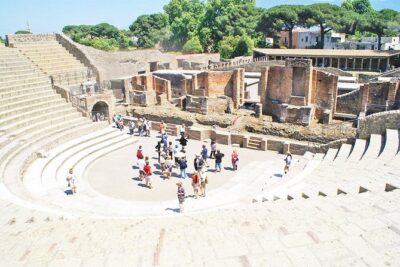
Next up: the theatres. These aren’t just “cool ruins.” They represent a big part of Roman culture—public entertainment and community gathering.
In a guided walk, theaters are one of the best places to understand how public architecture served daily life. Even in ruins, you can get a sense of scale: who would have sat where, how people would have experienced performances, and how the theater fit into the city around it.
If you care about history but you’re also allergic to lectures, this stop is a good balance. It’s visual. It’s architectural. And it’s easier to connect emotion to space when you’re standing where people once watched.
Thermal Baths: Daily Routine, Not Just a Roman Flex
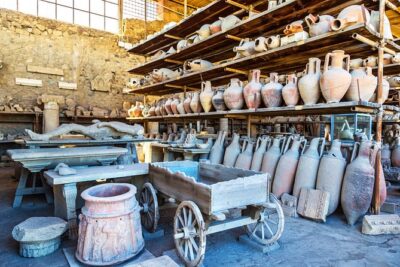
Pompeii’s thermal baths help you see the city as a place of routine, not only public spectacle. Baths were a social hub. They were also a practical part of life.
On this tour, you’ll likely move through the idea of what the baths meant: a space to wash, talk, relax, and gather. The value here is context. Instead of treating the baths like a random complex, you understand why Romans built these places and how they shaped social interaction.
One practical consideration: if you don’t like walking on uneven stone or surfaces, plan to take it slow and wear supportive shoes. Pompeii is historic ground, not a smooth museum floor.
Walking the Ancient Streets: Fountains, Bakery Spots, Shops
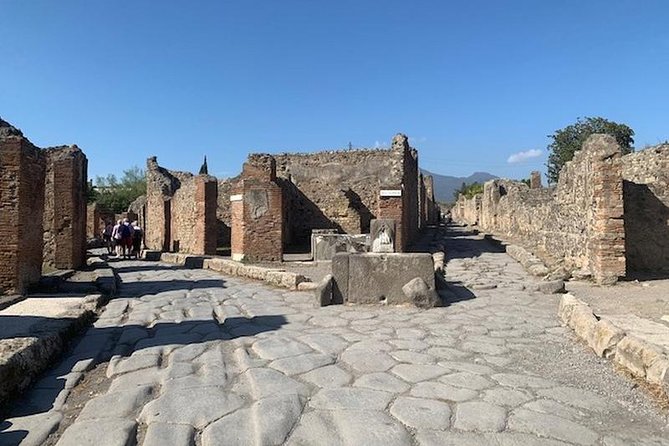
The tour doesn’t stop at grand monuments. You’ll also walk ancient streets with fountains, plus areas that reflect daily commerce and food—think bakery-style spaces and quick-meal concepts, along with houses and shops.
This is where Pompeii feels most alive. Public buildings explain civic life, but street-level details explain how people spent their hours. When you see shops and market-adjacent areas in context, you start to understand Pompeii as a functioning city, not a postcard.
I especially like this part because it helps you build a “day in Pompeii” picture. After you’ve seen the Forum and the theaters, then you hit the streets, the whole city becomes more coherent.
Frescoes and Mosaics: The Art That’s Still Communicating
You’ll also see frescoes and mosaics. In Pompeii, art often survives in fragments, so a guide helps you notice what matters: patterns, subjects, placement, and what the decoration might have meant for the space it’s in.
This is another reason I like a guided 3-hour format. Without someone pointing out what you’re looking at, it’s easy to miss how striking these surfaces can be. With a guide, you get to treat them like evidence—messages left behind by everyday people.
Admission Ticket Not Included: Plan Your Budget
This experience includes a tour guide, but Pompeii admission is not included. That means your total trip cost will be the guide price plus the park entry ticket and any other fees and taxes that apply.
When you’re weighing value, think about what you’re buying: a licensed guide who helps you make sense of Pompeii in a tight timeframe. If you were to do it alone, you’d still pay the entry fee, but you’d miss the “why this matters” layer that makes Pompeii feel less overwhelming.
So yes, the guide portion is premium. But for many people, the trade is worth it because it turns your hours into understanding.
Price and Value: $335.48 Per Group (Up to 8)
The price is $335.48 per group, up to 8 people, for about 3 hours. For a private tour, that’s a workable price structure because it scales with group size.
Here’s how to think about value:
- If you’re traveling solo or as a couple, you may feel the price more directly.
- If you’re a small group (friends, family), the per-person cost drops fast.
- You also get time efficiency. Pompeii rewards smart routes, and this tour is built to avoid aimless wandering.
Mobile ticket included for the experience is a nice touch too. It reduces friction so you spend less time fussing and more time walking.
Who This Tour Works Best For
This tour is a good fit if you:
- want the biggest Pompeii highlights without using your whole day
- like history but don’t want a full-day slog
- prefer a private group experience where questions are welcome
- appreciate art details like frescoes and mosaics when someone explains what you’re seeing
It also says most travelers can participate. That’s broad, but it signals the route is designed for general visitors rather than only specialized audiences.
If you’re the type who enjoys planning around transportation and meeting points, the near public transportation detail helps. And because it ends where it starts, your day stays simple.
Should You Book Pompeii Ruins Special?
If you’re weighing this against a self-guided plan, I’d lean toward booking if you want Pompeii to feel understandable in a short window. The combination of a licensed guide, a Forum-to-baths-to-street walk, and built-in stops for art details is a strong way to get more meaning per hour.
Book it especially if you’re traveling with up to a few people and can share the group cost. You’ll get the benefits of a private guide without paying for a large group.
If you’re on a super-tight budget and don’t mind reading on your own, you could go independent. But if you want your time in Pompeii to feel efficient and satisfying, this is the kind of tour that makes your visit click.
FAQ
What does the Pompeii Ruins Special tour include?
The tour includes a tour guide. Pompeii admission is not included.
How long is the Pompeii Ruins Special tour?
It runs for about 3 hours.
Is this tour private?
Yes. It’s private, and only your group participates.
Where does the tour start?
It starts at Pompei Scavi Villa Dei Misteri, 80045 Pompei, Metropolitan City of Naples, Italy, and ends back at the meeting point.
How much does it cost and how many people can be in the group?
The price is $335.48 per group, for up to 8 people.
Do I need to bring a separate ticket to enter Pompeii?
Yes. The admission ticket is not included, so you’ll need to handle park entry separately. The experience uses a mobile ticket for the tour itself.
More Tour Reviews in Pompeii
- Pompeii Small Group Tour with an Archaeologist★ 5.0 · 6,593 reviews
- Discover the Ancient Ruins of Pompeii: Day Trip from Rome★ 3.5 · 2,247 reviews
- Pompeii and Herculaneum Small Group Tour with an Archaeologist★ 5.0 · 1,350 reviews
- Skip the Line Guided Tour of Pompeii led by an Archaeologist★ 5.0 · 703 reviews
- Pompeii Ticket + Tour with Optional Tasting Experience at Pompeii★ 5.0 · 663 reviews